
Solar water pump range
Solar Submersible Pumps
Compare compact DC submersible pumps for wells, tank filling, irrigation and remote water supply.
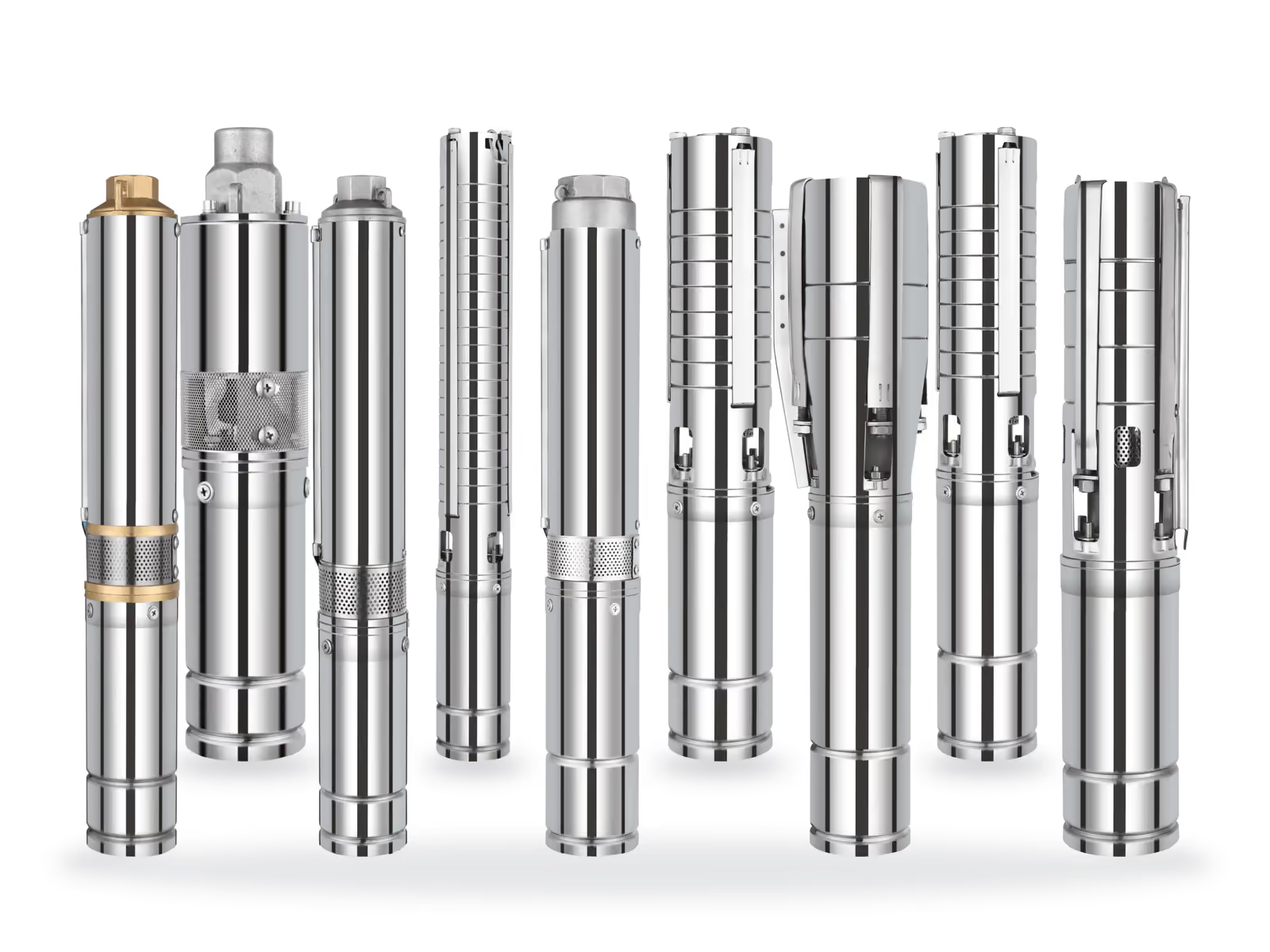
- Available models
- 4 models
- Rated voltage
- 24V or 48V DC
- Maximum flow range
- 1.5 to 3.5 m3/h
- Maximum head range
- 35 to 100m
Compact centrifugal and screw pump options.
Match the pump and solar array electrical limits.
Maximum values are not simultaneous duty points.
Confirm flow at the calculated total dynamic head.
Category overview
Solar pumping for wells and boreholes
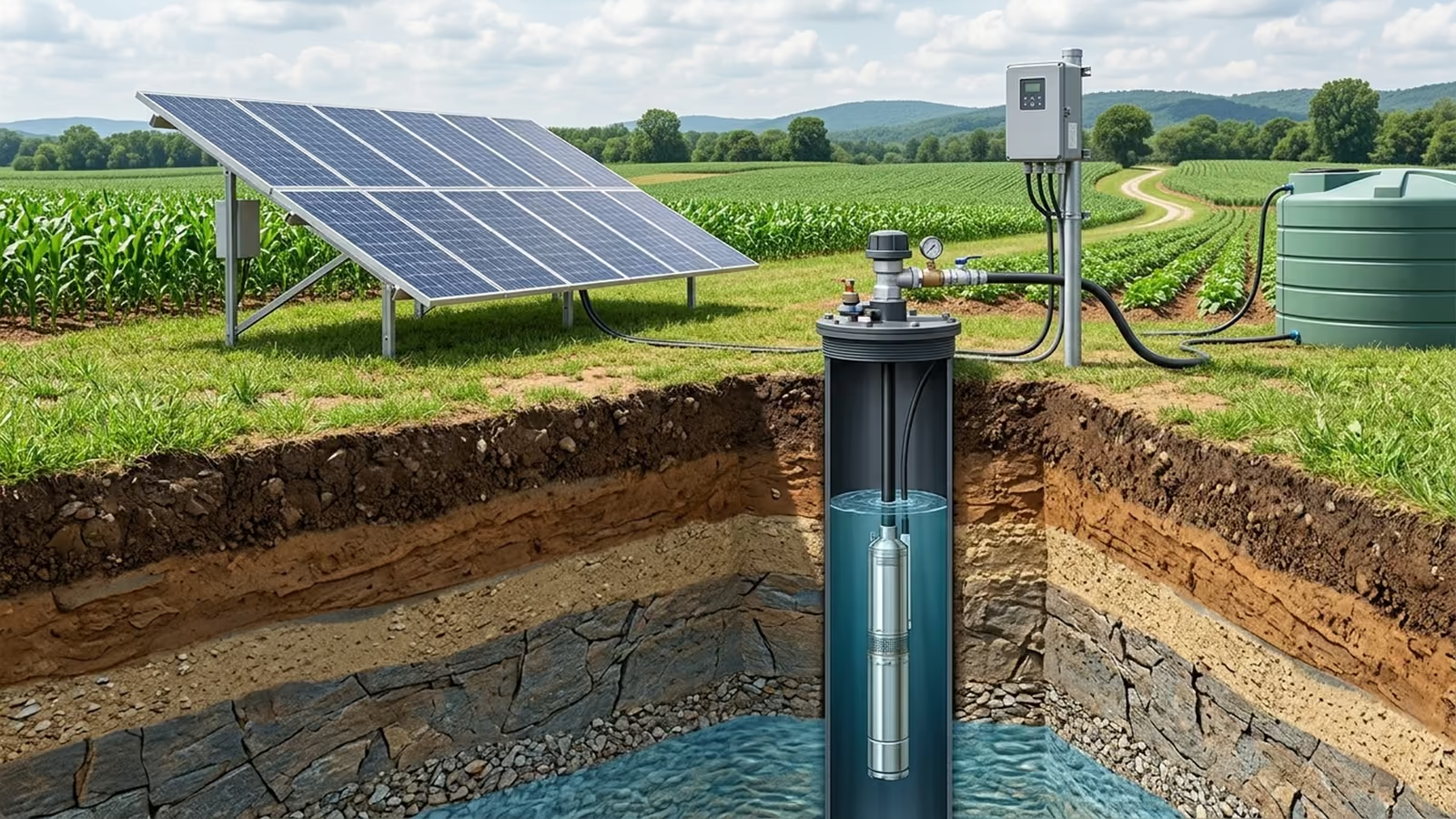
Solar submersible pumps operate below the water surface and move water upward through a delivery pipe. They are commonly evaluated for boreholes, wells, storage tanks, small irrigation systems and remote water supply where grid power is limited or unavailable. A solar array provides DC power during daylight, while a compatible controller manages electrical input and pump operation.
This category includes compact 24V and 48V DC pumps with published maximum flow values from 1.5 to 3.5 m3/h and maximum head values from 35 to 100m. The range includes centrifugal models for moderate flow and head combinations, a screw pump for lower flow at higher head, and a stainless steel impeller model for projects that require that documented construction feature.
A product name or maximum catalogue value is only a starting point. The actual operating point depends on the pumping water level, vertical rise, pipe length and diameter, fittings, outlet pressure, solar input and controller limits. Compare the models below, then confirm expected flow against verified performance data before ordering.
Available range
Compare Rakour solar submersible pump models
Each product page contains the confirmed catalogue data, selection notes, electrical limits and application guidance for that model.
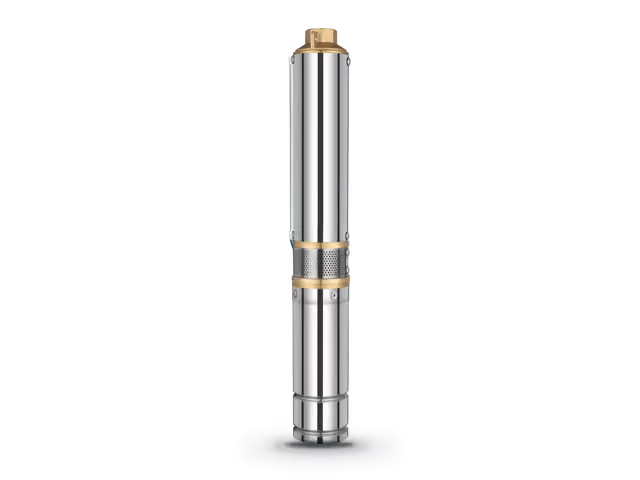
2-inch DC solar submersible pump with plastic impeller
2-Inch 24V DC Solar Submersible Pump
Model 2DPC1.5-35-24-200
A 200W Rakour 2DPC solar submersible pump with a plastic impeller, rated for up to 1.5 m3/h maximum flow and 35m maximum head.
- Rated voltage
- 24V DC
- Rated power
- 200W
- Maximum flow
- 1.5 m3/h
- Maximum head
- 35m
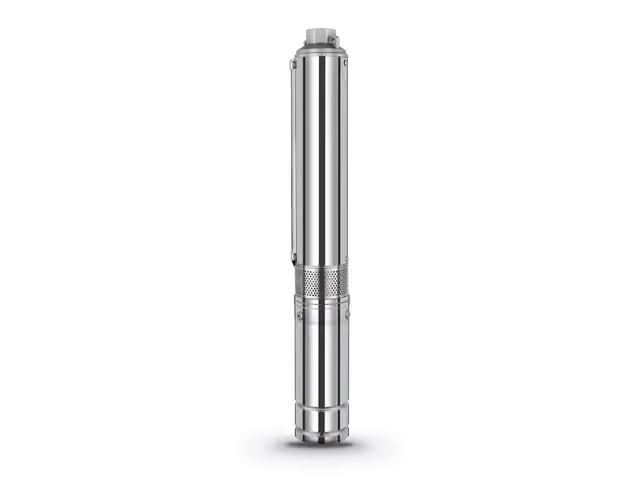
24V Solar Submersible Pump
24V Solar Submersible Pump
Model 3DPC3.5-35-24-300
24V Solar Submersible Pump with 300W power, 3.5 m3/h maximum flow, and 35 m maximum head.
- Rated voltage
- 24V DC
- Rated power
- 300W
- Maximum flow
- 3.5 m3/h
- Maximum head
- 35m
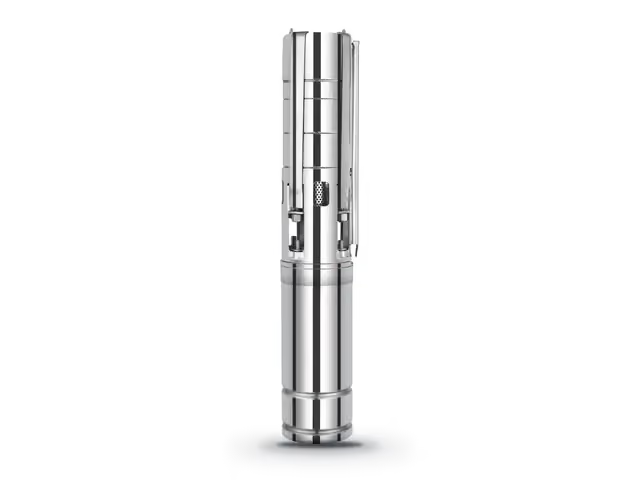
48V Solar Screw Pump
48V Solar Screw Pump
Model 3DSS1.7-100-48-500
48V Solar Screw Pump with 500W power, 1.7 m3/h maximum flow, and 100 m maximum head.
- Rated voltage
- 48V DC
- Rated power
- 500W
- Maximum flow
- 1.7 m3/h
- Maximum head
- 100m
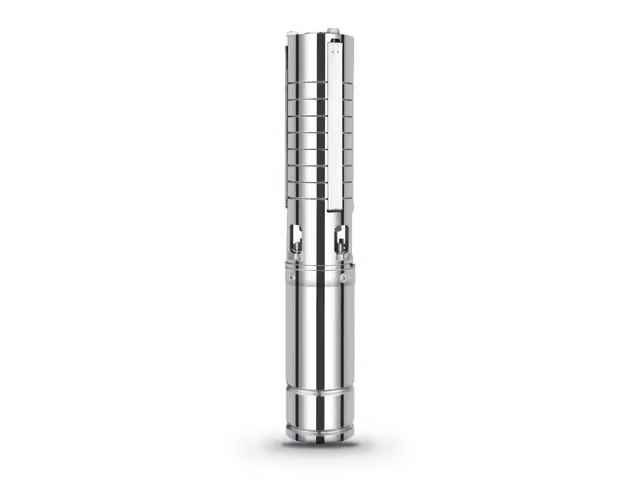
48V Solar Submersible Pump with Stainless Steel Impeller
48V Solar Submersible Pump with Stainless Steel Impeller
Model 4DSC3.5-50-48-400
48V Solar Submersible Pump with Stainless Steel Impeller with 400W power, 3.5 m3/h maximum flow, and 50 m maximum head.
- Rated voltage
- 48V DC
- Rated power
- 400W
- Maximum flow
- 3.5 m3/h
- Maximum head
- 50m
Quick comparison
Screen the range by duty, not by power alone
Use this table for initial comparison. Maximum flow and maximum head describe opposite boundaries of a pump curve and must not be treated as one simultaneous operating point.
| Model | Pump type | Rated voltage | Rated power | Maximum flow | Maximum head | Outlet |
|---|---|---|---|---|---|---|
| 2DPC1.5-35-24-200 | 2-inch DC solar submersible pump with plastic impeller | 24V DC | 200W | 1.5 m3/h | 35m | 3/4 in |
| 3DPC3.5-35-24-300 | 24V Solar Submersible Pump | 24V DC | 300W | 3.5 m3/h | 35m | 1 1/4 in |
| 3DSS1.7-100-48-500 | 48V Solar Screw Pump | 48V DC | 500W | 1.7 m3/h | 100m | 3/4 in |
| 4DSC3.5-50-48-400 | 48V Solar Submersible Pump with Stainless Steel Impeller | 48V DC | 400W | 3.5 m3/h | 50m | 1 1/4 in |
Selection guide
Five inputs define the suitable pump
Start with measured site conditions and the required water delivery. A model can only be confirmed after the hydraulic and electrical requirements are considered together.
- 01
Identify the water source and pumping level
Record whether the source is a borehole, lined well, open well or tank. Measure the static water level and the expected pumping water level after drawdown. Well depth alone does not define the lift the pump must overcome.
- 02
Calculate total dynamic head
Add the vertical distance from the pumping water level to the delivery point, friction through the pipe and fittings, and any pressure required at the outlet. This total is the head used to read the pump curve.
- 03
Define required flow and daily volume
State the target flow or the total volume needed each day. For tank filling, divide daily volume by realistic effective pumping hours. For direct irrigation, include the pressure and flow required by the active irrigation zone.
- 04
Confirm bore, pipe and cable conditions
Check that the pump diameter fits the bore or casing with suitable clearance. Record pipe diameter and length, cable route, installation depth and any submerged cable extension needed beyond the supplied lead.
- 05
Match the solar array and controller
Respect rated voltage, optimum operating input and total open-circuit voltage limits. Module voltage changes with temperature, so final series and parallel configuration must be checked for the local climate and selected controller.
Pump construction
Choose the hydraulic format that fits the duty
The model range uses different pumping mechanisms and impeller constructions. Select from verified specifications rather than assuming that every submersible pump behaves the same way.
Centrifugal submersible pumps
Centrifugal models use rotating impellers to add energy to the water. They are practical for duties requiring moderate flow across a defined head range. Flow normally falls as total head rises, so the performance curve is essential for final selection.
Solar screw pumps
A screw pump is a positive displacement format that can support lower flow at comparatively higher head. It may suit deep lifting or steady tank filling, but water quality, operating limits and the verified curve still need review.
Plastic and stainless steel impeller options
The catalogue identifies both plastic impeller and stainless steel impeller product families. Construction choice should reflect the approved product data, water conditions, project priorities and maintenance plan rather than an unsupported durability assumption.
Typical duties
Where solar submersible pumps are commonly evaluated
The applications below are starting points. The selected model must still match the measured source, total head, required flow, pipe route and electrical design.
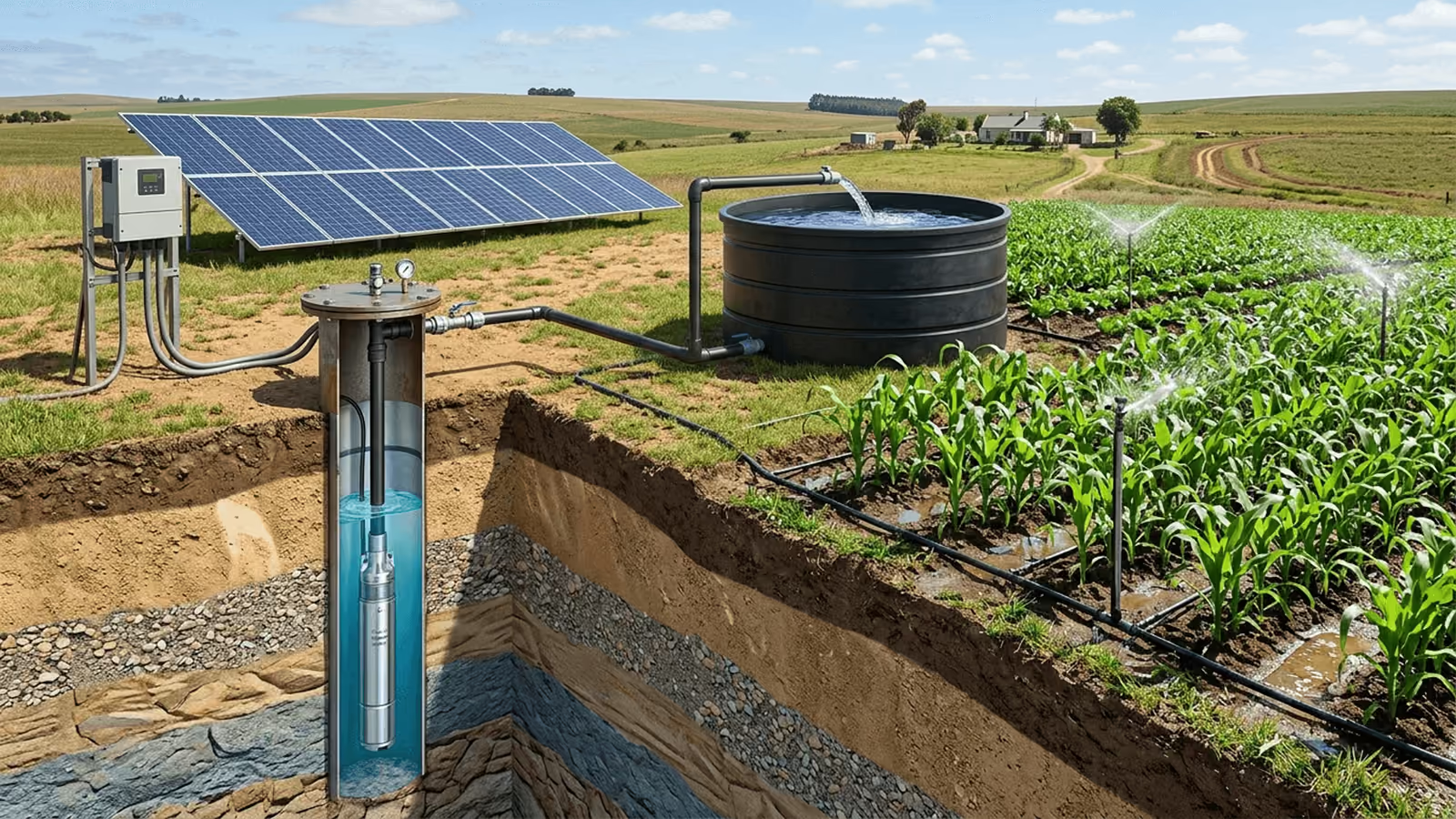
Borehole and well water lifting
Move groundwater from below the pumping water level to a surface tank or distribution point. Confirm casing diameter, drawdown, pump submergence and the full vertical lift before comparing models.
Daytime storage tank filling
Pump during available solar hours and store water for use later. This arrangement can separate variable daytime energy from a steadier irrigation, livestock or domestic supply schedule.
Small irrigation water supply
Supply a matched irrigation zone directly or fill a buffer tank. Drip lines, sprinklers and filters add pressure loss, so required outlet pressure must be included in total dynamic head.
Remote water transfer
Transfer water between a well, reservoir or tank where grid power is unavailable. Long delivery pipes can add substantial friction, especially when the internal pipe diameter is small.
Complete system
Plan every component around one operating point
A submersible pump is one part of a water and energy system. Each component must support the same hydraulic duty, electrical limits and site conditions.
-
Solar array
Supplies DC energy. Size voltage and power using module data, temperature range, effective solar hours and the pump input limits.
-
Pump controller
Manages power delivery and protection. Confirm compatibility with the selected pump, solar array configuration and available sensor inputs.
-
Submersible pump
Select the model from required flow at total dynamic head, not from maximum values or motor power alone.
-
Cable and protection
Account for cable length, conductor size, voltage drop, submerged joints, dry-run protection and installation standards.
-
Delivery pipe and fittings
Size the pipe route to control friction loss. Include valves, filters, bends and the pressure required at the final outlet.
-
Storage or distribution
Decide whether the pump fills a tank or supplies the demand directly. Storage can balance solar pumping hours with water use outside daylight.
Selection questions
Solar submersible pump FAQ
Direct answers to the questions buyers and project teams usually need before choosing a model.
How do I choose the right solar submersible pump?
Calculate total dynamic head, define the required flow or daily water volume, check bore diameter and installation depth, then compare the required operating point with verified pump performance data. After the hydraulic model is screened, confirm rated voltage, optimum DC input, solar array open-circuit voltage, controller compatibility and cable requirements.
Is maximum flow available at maximum head?
No. Maximum flow and maximum head normally represent opposite ends of a pump curve. Maximum flow is associated with low head, while flow approaches zero near maximum head. The useful value is the expected flow at the site's calculated total dynamic head.
What is total dynamic head for a solar well pump?
Total dynamic head includes the vertical rise from the pumping water level to the delivery point, drawdown while pumping, friction loss through pipe and fittings, and any pressure needed at the outlet. It is more complete than well depth and must be calculated for the actual pipe route.
Should I choose 24V or 48V DC?
Choose the electrical platform only after identifying a hydraulically suitable model. The complete solar array and controller must match the pump's rated voltage, optimum operating input and open-circuit voltage limit. A higher voltage label does not by itself indicate better hydraulic performance.
Can a solar submersible pump run irrigation directly?
It can be evaluated for direct irrigation when the expected pump flow and pressure match the active irrigation zone. Filters, emitters, sprinklers, elevation and pipe friction all consume head. A storage tank may be more practical when irrigation demand and solar pumping output occur on different schedules.
What information should I send for pump selection?
Send the water source type, bore or casing diameter, static and pumping water levels, delivery elevation, pipe length and internal diameter, required flow or daily volume, outlet pressure, installation location, local solar conditions and any known power or controller constraints.
Project support
Match a solar submersible pump to your site
Share the water source, pumping level, required flow, total head, pipe route and solar conditions. Rakour will help review a suitable model and system direction.